Mississauga basements take a beating. Lake effect storms, freeze-thaw cycles, spring snowmelt, and clay-heavy soils push water toward foundations from October through May. When the water has nowhere to go, it finds seams, hairline cracks, and weak joints. I have walked into finished basements where new laminate squished underfoot like a sponge, and I have seen century-home stone foundations that looked fine in July but bled white salts by March. The frustrating part is that most leaks start quietly. By the time there is a puddle, the problem has been brewing for months.
That is why recognizing early warning signs matters. If you live in Mississauga, the cues below will help you decide when to call a waterproofing contractor and what to expect on site. A reputable specialist won’t just patch symptoms, they will trace water to its path of least resistance and fix that path with the right combination of drainage, sealing, and redirection.
Why small moisture problems turn into big repairs
Water is patient, and concrete is porous. Even a well-poured foundation absorbs moisture. When the surrounding soil stays saturated, hydrostatic pressure forces water into capillaries and joints. In winter, water in those gaps freezes, expands, and opens the cracks a little more. After a couple of seasons, a hairline turns into a through-crack. Add a blocked downspout or a failing weeping tile, and the slab or wall can bow, leak, or both.
I often get called after a homeowner tries quick fixes - more paint on the wall, extra towels by the cold room door. Paint blisters, musty air returns, and that tidy storage shelf starts to rust from the feet up. At that point, professional help costs more than it would have six months earlier, because the scope has grown. The trick is to catch the change in conditions and act decisively.
The first five signs to never ignore
Persistent musty odour after rain or snowmelt
That earthy smell is microbial growth feeding on moisture in drywall paper, wood studs, or carpet backing. If the smell spikes within 24 to 48 hours of precipitation, water is entering the envelope. Odour without visible wet spots often means vapour is diffusing through a wall or slab, not pooling on the surface. A hygrometer reading over 60 percent relative humidity in the basement is another clue to call for waterproofing services.
Efflorescence - white, chalky deposits on foundation walls
Efflorescence is mineral salt left behind when water migrates through concrete and evaporates. It is a breadcrumb trail for a contractor. A vertical plume beneath a window well hints at poor drainage in that well. A broad tide line along the lower third of a wall suggests hydrostatic pressure at the footing level and possibly a clogged weeping tile.
Peeling or bubbling paint on masonry
Latex paint becomes a moisture trap on foundation walls. When vapor pressure builds behind it, you see blisters and flakes. In Mississauga homes where someone applied “waterproofing paint,” I often find mould behind furring strips and crumbling parging on the exterior. Paint failure is less about cosmetics, more about pressure and constant damp behind the finish.
Hairline cracks widening season by season
Concrete cracks are normal as slabs cure. Movement across seasons should stay tight - a hair’s width. If you can fit a dime’s edge into a wall crack, or a crack telegraphs across several blocks, thermal movement or settlement needs attention. Black staining along a crack is a giveaway that water is actively using that route. Epoxy injection can seal a static crack, but if water is being pushed by pressure from saturated soils, the repair must include drainage.
Water pooling along baseboards or at the floor-wall joint
The cove joint where the wall meets the slab is a common entry point. Shallow puddles after storms point to weeping tile failure, undersized sump pump capacity, or a disconnected downspout concentrating water at one corner. Pooling along one wall often correlates with a negative slope in the yard or a patio installed tight to the foundation without a drainage gap.
Five more red flags that call for a professional
Sump pump short cycling or running dry
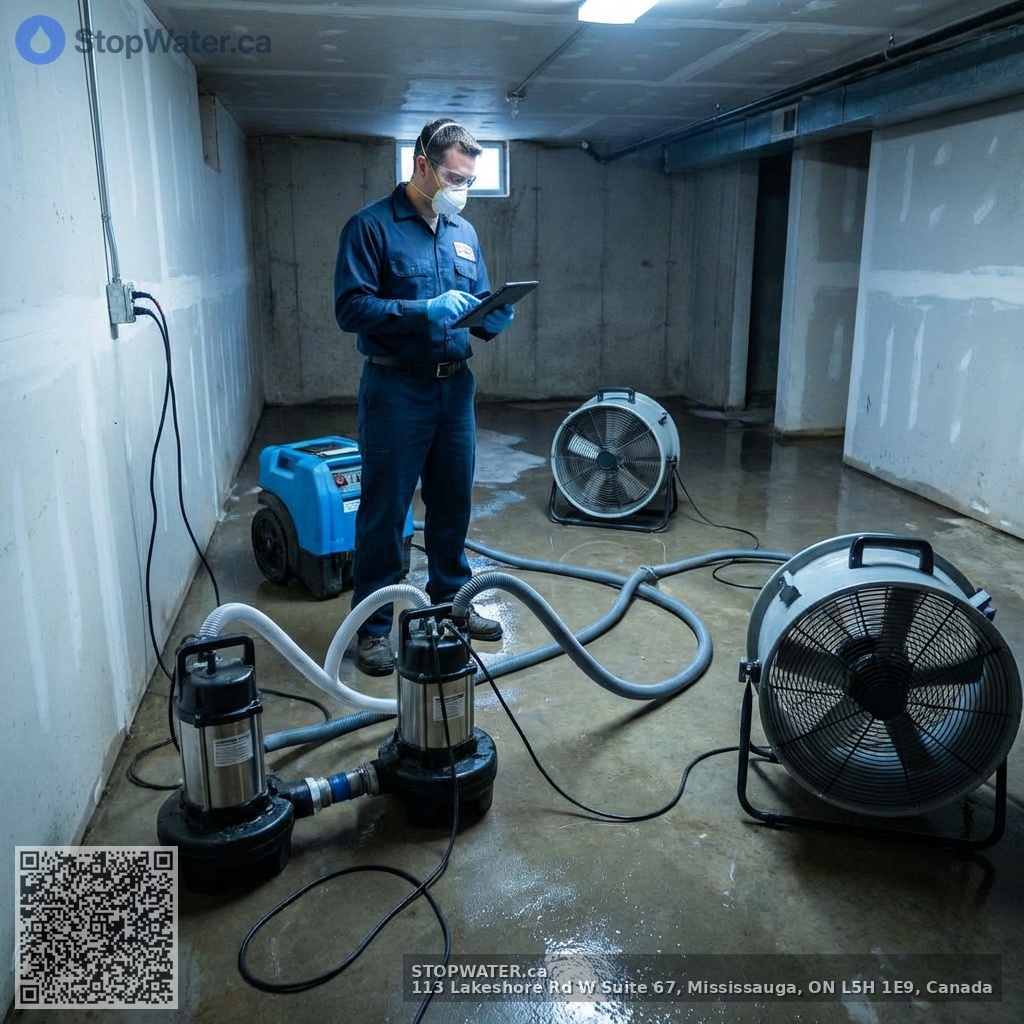
A healthy system runs hard during melt and storms, then rests. If your pump short cycles every couple of minutes, float settings or pit size may be wrong, or groundwater is constantly filling due to a high water table. A pump that runs loud, vibrates, or overheats is near failure. In Mississauga, many homes sit above clay that drains slowly, so sump basins need adequate volume and a reliable check valve. A backup pump and battery are not luxuries here, they are insurance.
Bowed or bulging foundation walls
Any inward deflection in a block wall is serious. Saturated soils expand and press on the wall. Freeze cycles magnify that force. I use a string line or laser to check deviation over a span. Even 10 to 15 millimetres of bowing over a few meters warrants evaluation. Exterior excavation with proper waterproofing and drainage relieves pressure. In advanced cases, bracing or carbon fiber reinforcement may be part of the plan.
Rust on metal shelving, furnace legs, or bottom of appliances
Metal sweats only when the air is persistently humid near the floor. If a furnace’s base shows orange rust blooms, the slab has high moisture drive. This often pairs with damp carpet tack strips or cupping wood flooring. Surface dehumidifiers help, but they do not solve water migration through the slab. A pro will look at perimeter drains, slab vapour barriers, and exterior grading.
Leaky or overflowing window wells
Window wells should sit on clean gravel with a drain to the weeping tile or daylight. When I see them packed with soil or landscaping fabric, I expect to find water stains below the sill and crumbling drywall in the adjacent room. A well that becomes an aquarium during storms needs an immediate fix - digging out the well, adding washed stone, installing a vertical drain, and sealing the foundation penetration.
Foundation parging that flakes off, exposing damp block
Parging is cosmetic, but it tells a story. When it spalls in sheets and the exposed block feels damp hours after rain, moisture is wicking through the wall. The cure is not new parging alone. You want exterior waterproofing - a membrane or liquid-applied barrier, new drainage board, and clean stone over a functioning weeping tile - paired with site grading that sheds water.
How Mississauga’s soil and weather shape your risk
Local conditions matter. Much of Mississauga sits on glacial till and clay, which holds water. When builders backfill against a new foundation with the same clay, that band of soil stays more saturated than undisturbed ground. Add rooflines that channel square meters of runoff into single downspouts, and you have a recipe for standing water along the footing.
Spring makes it worse. Snow piles begin to melt while the upper few centimeters of soil are still frozen. Water cannot percolate down, so it runs sideways, straight to the foundation. If eavestroughs are clogged from fall leaves, downspouts dump next to the wall, and window wells fill. That is the week my phone lights up.
Wind-blown rain off Lake Ontario hits west and south exposures hardest. Brick veneer and stone cope well, but mortar joints, weep holes, and flashing details must be perfect. When I see damp spots telegraphing through lower brick courses, I check weeps and flashing above lintels, then move inside to read moisture with a meter.
What a proper diagnosis looks like
A competent waterproofing contractor does not start with a quote, they start with a map. We walk the exterior and interior, ask when the problems show up, and try to replicate conditions with a hose, thermal camera, and moisture meter. I sketch water pathways - roof to gutter, gutter to downspout, downspout to grade, grade to foundation. If there is a sump, I measure pump performance by timing how fast the basin fills and empties. We trace weeping tile outlets if any exist, and note the slope of paving and landscaping against the wall.
Inside, we peel back baseboard at suspect spots and check for black staining on nails or drywall paper. A calcium chloride test on the slab can show vapour emission rate if we are evaluating flooring options. In finished basements, tiny pinholes behind furniture tell stories - pinhole plus rust on the tack strip equals chronic damp, not a one-time spill.
This is the point where a pro earns trust. Sometimes the fix is not glamorous. A shovel, 3 meters of downspout extension, and a day of regrading can stop a basement leak better than any interior coating. Other times, nothing short of exterior excavation and new weeping tile will do. Cookie-cutter answers waste money.
Repair options that actually work
Exterior excavation and waterproofing stay top of the list for a reason. When we dig to the footing, clean the wall, repair cracks, apply a rubberized membrane, and add drainage board over clean 3/4 inch stone with a properly sloped weeping tile, we are controlling water before it enters. This is durable and stops hydrostatic pressure. Yes, it is disruptive and more investment up front, but the result typically outlasts interior band-aids by decades.
Interior systems have a place. If there is no room to excavate because a neighbour’s driveway sits 600 millimeters from your wall, an interior perimeter drain with a sump can relieve pressure and intercept water at the cove joint. It will not keep the outside of your wall dry, but it will keep your finished space functional. Pair this with a robust dehumidifier to keep relative humidity in check.
Crack injection works when the crack is the only path. Epoxy welds a static structural crack. Polyurethane foam expands to fill a non-structural leak path. If the surrounding soil is pushing water under pressure, injection is a component of the fix, not the whole fix.
Window well remediation is straightforward. Dig out to the footing, install a vertical drain down to the weeping tile or to a dedicated drywell, bed the well in washed stone, seal the window foundation penetration, and cap with a properly sized cover. Skipping the drain turns that well into a bucket.
Sump systems should be treated as a small machine room. A sealed lid reduces humidity, a quality check valve prevents recirculation, and a battery backup or water-powered backup buys hours during a storm if utility power fails. I keep a log of cycle counts and replacement dates. Pumps give warning - noise, heat, frequent cycling - before they die.
The true cost of waiting
Homeowners ask for ballpark numbers. Exact prices depend on access, depth to footing, and finishes to protect, but experience sets some sensible ranges. A sump pump replacement with a decent battery backup can sit in the low thousands, more if the discharge line needs to be re-routed to meet municipal rules. Interior perimeter drains are usually priced by linear footage and scale with the footprint. Full exterior excavation on one wall can run several workdays with a crew, equipment, and materials. What matters more than the number is the trend: small problems are cheap in spring and expensive by fall. Once mould takes a foothold inside finished walls, you add remediation and reconstruction to the ticket. Insurance often excludes groundwater seepage. Most people discover that after a denied claim.
Mississauga homeowners should also check for municipal subsidy programs that offset parts of backwater valves, sump systems, or downspout disconnections. The details change, and eligibility can depend on inspection or proof of work by licensed contractors. A reputable firm will know the current rules and help you apply, but verifying with the city before you start avoids surprises.
What to do in the next 48 hours if you see two or more signs
- Document with photos and short notes keyed to weather - “rain overnight, puddle at northeast corner.” Move porous items off the floor and away from walls. Leave space for air to circulate. Run a dehumidifier and track relative humidity with a simple digital meter. Walk the exterior during rain. Watch downspouts, window wells, and grading. Note where water flows or stands. Call a local specialist for an assessment and ask for both exterior and interior options in writing.
Choosing the right help: questions that separate pros from patchers
Typing “waterproofing services near me” will generate pages of names. Focus on fit and process, not flash. I tell clients to ask how a contractor will diagnose, not just how they will fix. A good answer involves instruments and a site walk in dry and wet conditions if possible. Ask what failure modes their solution addresses - hydrostatic pressure, capillary rise, or surface flow - and what it does not. Clarify warranties, and whether they cover workmanship, materials, or both.
Be wary of one-size-fits-all sales pitches. An interior drain is not a cure for a leaking window well, and paint is not a barrier to water under pressure. Likewise, exterior excavation makes little sense if your only leak appears where a new deck ledger flashed poorly. A balanced quote can present tiered options: a minimal intervention with trade-offs, a standard package, and a comprehensive exterior system. When a firm pushes only the most expensive route without explaining why, keep asking questions.
Local knowledge counts. A waterproofing contractor who works across the GTA will have seen how Mississauga’s clay pockets behave differently than sandy soils closer to the lake. They will also know set-back rules, utility locate timelines, and how to protect your landscaping during excavation. That professionalism shows in the planning - plywood paths for equipment, dust control inside, and a clean handoff at the end.
Real-world snapshots from Mississauga homes
A semi near Burnhamthorpe had a musty rec room for years. No visible water, just damp air and rusty bottom shelves. The eavestrough over the back corner leaked, sending a concentrated stream into a flowerbed that had been built up against the brick. We cut the bed back, fixed the trough, extended the downspout 3 meters, and restored slope away from the wall. Smell gone in a week, humidity down by 15 percent. No sump, no trench, just a correct path for water.
Another case, a bungalow north of Dundas: overflowing window wells every storm. The homeowner had topped them with soil for planting. We dug to the footing, installed vertical drains to the existing weeping tile, backfilled with clean stone, sealed the below-grade window joints, and added clear covers. The next summer poured buckets for hours. The wells stayed dry, and the drywall below did not need replacing a second time.
A larger project off Winston Churchill involved bowed block walls on the north side. The bow measured roughly 20 millimeters across a 5 meter span. We excavated, relieved pressure, waterproofed the exterior with a rubberized membrane and dimple board, replaced collapsed clay weeping tile with perforated PVC in a deep bed of stone, and braced the interior during cure. That wall has held true over four winters, and the basement is now finished without fear.
When DIY helps, and when it hurts
You can do plenty before any crew arrives. Keep gutters clear, extend downspouts, store boxes off the floor on metal racks, and run a dehumidifier during shoulder seasons. These habits lower baseline moisture and protect finishes.
Know where DIY ends. Injecting structural cracks, trenching near gas or electrical services, or tying a new sump discharge into municipal systems are not weekend projects. I have repaired several cracked foundations that were made worse by overzealous grinding and the wrong sealants. Concrete remembers every cut you make. Once you slice rebar or open a cold joint, the wall behaves differently, and the repair becomes more involved.
How to think about “permanent” in waterproofing
Clients ask for permanent fixes. In building, permanent means systems that keep working as conditions change. Exterior membranes last decades, but only if the drainage behind them stays clean and the grading is maintained. Sump pumps are machines with finite lives, so permanence there looks like redundancy and maintenance intervals. Even a flawless exterior job can be undermined by a new patio poured flat to the wall. Long-term success comes from a system mindset: roof to ground, ground to wall, wall to interior, and back out again.
That system mindset is what you are buying when you search for “waterproofing services Mississauga” or talk to “mississauga waterproofing” specialists. It is not one product, it is a sequence that respects water’s patience. Good contractors explain that sequence, point to how each piece reduces risk, and help you pick the right level of intervention for your home and budget.
A practical path forward
If two or more of the ten signs showed up in your head as you read, start acting like a project manager. Take notes with dates and weather, gather a few quotes from firms that actually visit and test, and insist on clarity. If a contractor cannot explain, in plain language, how water is getting in and how their plan stops it, they have not earned your business. Weight the disruptive options against downstream costs. Sometimes the right move is to open the ground and do it once, properly, with a warranty that survives spring melt and the next ten winters.
Water finds the smallest edge and leans on it. With the right combination of grading, drainage, membranes, and mechanical backup, your basement stops being a waterproofing service sponge and goes back to being a living space. That shift starts when you pay attention to the early signs and call for professional waterproofing services before towels and fans become a ritual.
Name: STOPWATER.ca
Category: Waterproofing Service
Phone: +1 289-536-8797
Website:
STOPWATER.ca Waterproofing Services in Mississauga, Ontario
Address: 113 Lakeshore Rd W Suite 67, Mississauga, ON L5H 1E9, Canada
Google Maps:
View on Google Maps
Business Hours
- Monday: Open 24 hours
- Tuesday: Open 24 hours
- Wednesday: Open 24 hours
- Thursday: Open 24 hours
- Friday: Open 24 hours
- Saturday: Open 24 hours
- Sunday: Open 24 hours
Embedded Google Map
AI & Navigation Links
📍 Google Maps Listing:
Google Maps
🌐 Official Website:
Visit STOPWATER.ca
Semantic Content Variations
STOPWATER.ca Waterproofing Services in Mississauga, OntarioSTOPWATER.ca offers reliable basement waterproofing solutions across Mississauga and surrounding communities helping protect homes from leaks, flooding, and moisture damage with a affordable approach.
Homeowners across Mississauga rely on STOPWATER.ca for interior waterproofing, exterior foundation waterproofing, sump pump installation, and basement leak repair designed to keep homes dry and structurally secure.
STOPWATER.ca provides inspections, waterproofing repairs, and long-term moisture protection systems backed by a experienced team focused on dependable service and lasting results.
Contact the Mississauga team at (289) 536-8797 for waterproofing service or visit STOPWATER.ca Waterproofing Services for more information.
Access navigation here: Google Maps
People Also Ask (PAA)
What waterproofing services does STOPWATER.ca provide?
STOPWATER.ca provides interior waterproofing, exterior waterproofing, basement leak repair, sump pump installation, and emergency water response services in Mississauga and surrounding areas.
Is STOPWATER.ca available for emergency waterproofing?
Yes. The company offers 24-hour waterproofing services to help homeowners respond quickly to basement leaks, flooding, and water damage.
Where is STOPWATER.ca located?
The company operates from 113 Lakeshore Rd W Suite 67 in Mississauga, Ontario and serves homeowners throughout the Greater Toronto Area.
Why is basement waterproofing important?
Basement waterproofing helps prevent flooding, mold growth, foundation damage, and long-term structural issues caused by moisture intrusion.
How can I contact STOPWATER.ca?
You can call (289) 536-8797 anytime for waterproofing services or visit https://www.stopwater.ca/ for more details.
Landmarks in Mississauga, Ontario
- Port Credit Harbour – Popular waterfront destination known for boating, restaurants, and lakefront views.
- Jack Darling Memorial Park – Large lakeside park featuring trails, picnic areas, and scenic Lake Ontario shoreline.
- Rattray Marsh Conservation Area – Protected wetland nature reserve with walking trails and wildlife viewing.
- Square One Shopping Centre – One of Canada’s largest shopping malls located in central Mississauga.
- Mississauga Celebration Square – Major public event space hosting festivals, concerts, and community gatherings.
- University of Toronto Mississauga – Major university campus known for research, education, and scenic grounds.
- Lakefront Promenade Park – Waterfront park featuring marinas, beaches, and recreational trails.